
Roof replacement Lancaster PA projects are among the biggest single investments a homeowner will ever make, and in Lancaster County they come with local wrinkles...
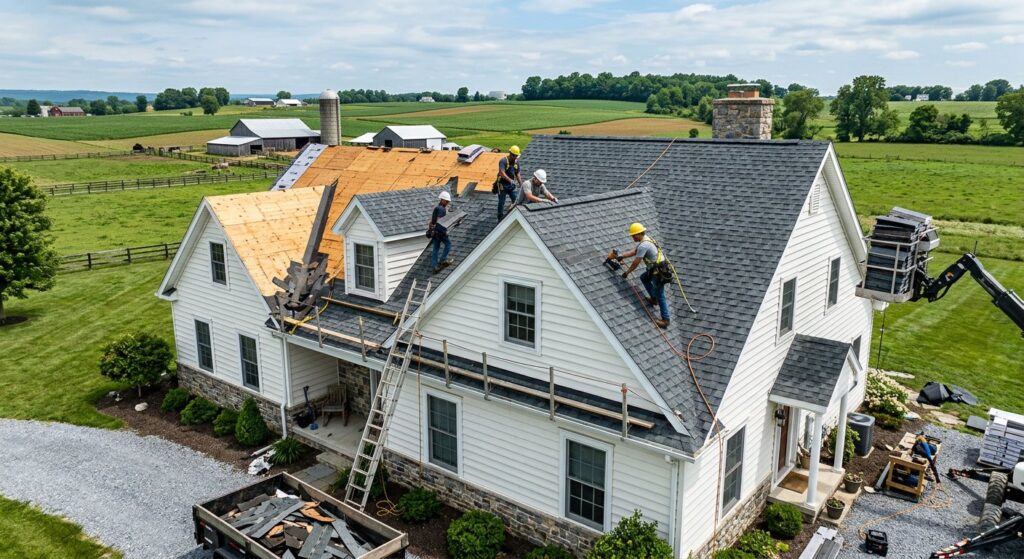
Roof replacement Lancaster PA projects are among the biggest single investments a homeowner will ever make, and in Lancaster County they come with local wrinkles that national advice rarely covers: Pennsylvania’s unique contractor registration rules, nor’easter and hail exposure, freeze-thaw cycles that punish shortcuts, and a roofing market where craftsmanship varies enormously between crews. Spend wisely and a new roof protects your home for decades, trims insurance headaches, and adds real resale value. Spend badly and you may be paying for the same roof twice within ten years. This guide walks through nine practical ways to save money and avoid stress on a Lancaster area roof replacement, grounded in current 2026 cost data, Pennsylvania’s Home Improvement Contractor law, and standard roofing best practices. It covers what a new roof actually costs this year, how to compare bids that look similar but are not, how to handle storm damage claims correctly, and how to tell a contractor worth your roof deck from one worth avoiding.
Key Takeaways
- A full asphalt shingle replacement on a typical 2,000 square foot Lancaster County home runs roughly $8,000 to $15,000 installed in 2026, with material choice and roof complexity driving the range.
- Architectural asphalt shingles last about 25 to 35 years, while standing seam metal reaches 40 to 70 years and natural slate can exceed 75.
- Pennsylvania does not issue a statewide roofing license; contractors performing $5,000 or more of residential work per year must register as Home Improvement Contractors with the PA Office of Attorney General.
- A quality replacement includes the whole system: underlayment, ice-and-water shield at vulnerable edges, flashing, and balanced ventilation, not just new shingles.
- After storms, document damage before any repairs and be wary of contractors who offer to absorb your insurance deductible, an arrangement that can constitute insurance fraud.
What Roof Replacement Costs in Lancaster PA in 2026
Roofing prices climbed notably through the mid-2020s, so old bookmarks are misleading. Current 2026 cost data puts installed asphalt shingle replacement between roughly $3 and $9 per square foot depending on tier, with most homeowners paying around $10,000 for a standard 2,000 square foot roof with tear-off included. Premium materials scale up from there. Lancaster County pricing generally tracks national averages, though the steep pitches, turrets, and elaborate valley systems common on older Victorian homes in the county’s historic boroughs can push a project above the typical band. The table below summarizes typical installed ranges, which closely follow Lancaster County market pricing.
| Material | Installed Cost per Square Foot | Typical Lifespan | Best For |
|---|---|---|---|
| 3-tab asphalt shingles | $3.50 to $5 | 15 to 25 years | Budgets, outbuildings |
| Architectural asphalt | $4 to $8.50 | 25 to 35 years | Most Lancaster homes |
| Luxury asphalt shingles | $7 to $16 | 30 to 50 years | Premium curb appeal |
| Standing seam metal | $10 to $20 | 40 to 70 years | Longevity, snow shedding |
| Cedar shake | $8 to $15 | 20 to 30 years | Character homes |
| Natural slate | $25 to $45 | 75 to 150 years | Historic properties |
| Flat roofs, EPDM or TPO | $5 to $12 | 15 to 40 years | Porches, additions, low slope |
What Drives Your Quote
Two bids on the same street can legitimately differ by thousands. The main variables are:
- Roof size in squares, where one square equals 100 square feet
- Pitch and stories, since steep or multi-story roofs need more safety equipment and labor time
- Number of existing layers requiring tear-off and disposal
- Condition of the roof decking, which is only visible after the tear-off
- Chimneys, skylights, valleys, and penetration counts that multiply flashing work
- Material tier and the warranty level attached to the full system
- Permit fees, dumpster costs, and interior repair work after the roof is sealed
The Hidden Line Items
Ask every bidder how their quote handles plywood decking replacement when rotten sheets are found, typically priced per sheet, and whether drip edge, pipe boots, and step flashing are included or extra. These small items are where lowball bids quietly turn into change orders. Also confirm who handles dumpster placement, driveway protection, and landscaping restoration around the job site, because a careless crew can damage siding, gutters, and shrubs while working above them.
A quick cost-per-year exercise clarifies the material decision. An architectural asphalt roof at roughly $12,000 lasting 30 years costs about $400 per year of service, while a metal roof at roughly $25,000 lasting 50 years runs about $500 per year before factoring in energy benefits and insurer treatment of longer-lived roofs. The numbers converge faster than most homeowners expect, which is why “cheapest installed price” is the wrong lens for a 30-year asset.
9 Powerful Ways to Save Money and Avoid Stress
1. Know the Real Signs It Is Time
Replacement timing drives the whole budget, so learn the signals rather than waiting for water on the ceiling. Curling or cupping shingle edges, bald spots where granules collect in the gutters, cracked or missing shingles, a sagging roofline, daylight visible from the attic, and a roof passing the 20 year mark all point toward replacement territory. Catching them one or two seasons early lets you schedule on your terms, in the right season, with the contractor you actually chose rather than whoever can stop an active leak fastest.
Repair or Replace?
Isolated damage calls for a targeted repair: a few missing shingles, one failed flashing detail, or a single small leak usually do not justify a full replacement. Replacement becomes the better financial decision when problems spread across multiple roof sections, leaks recur after repairs, or the roof simply approaches the end of its material lifespan. A reputable contractor will tell you honestly which category you fall into, because repeat service calls cost them goodwill too. Many established Lancaster County roofers offer free or low-cost inspections, and a thorough one should include the attic: water stains on sheathing, damp insulation, and daylight at penetrations often reveal problems the street view cannot.
2. Collect Three Itemized Estimates and Compare Line by Line
Three bids is the classic rule for a reason. Insist that each estimate itemizes tear-off, underlayment, flashing, ventilation, material model numbers, permit costs, and cleanup. This is how you spot the real differences: one bid may include synthetic underlayment and a full ventilation rebalance while another quietly prices the cheapest version of each component. A rock-bottom bid is not a bargain if it omits half the system, and comparing line by line is the only defense against that game. Also ask each contractor who performs the labor, because in-house crews and rotating subcontractors produce very different accountability when a warranty question arises two winters later.
3. Match the Material to Your Plans, Not Just Your Wallet
The cheapest shingle is rarely the best value. If you plan to stay 20 or more years, architectural asphalt, metal, or even slate can pencil out on a cost-per-year basis, and longer-lasting roofs generally draw better treatment from insurers. If you expect to sell within five years, a quality architectural shingle delivers the curb appeal and inspection confidence buyers look for without overspending. Match the material to the horizon you actually have. Material choice also ripples into operating costs: reflective granule technology, proper attic ventilation, and modern underlayment all reduce summer heat gain in upstairs rooms, and some insurers offer favorable treatment for newer roofs or impact-rated shingles, so ask your agent how each option would affect your premium before committing.
4. Verify Pennsylvania HIC Registration and Insurance
Pennsylvania takes an unusual approach: there is no statewide roofing license, but the Home Improvement Consumer Protection Act requires any contractor performing $5,000 or more of residential work per year to register as a Home Improvement Contractor with the Pennsylvania Office of Attorney General. Ask for the contractor’s HIC registration number and verify it through the Attorney General’s online lookup. Also confirm current general liability insurance and workers’ compensation coverage directly with the insurer. Pennsylvania law also requires written contracts for covered home improvement work, so treat a contractor who resists paperwork or operates without a verifiable HIC number as an immediate disqualification. Expect that written contract to spell out names and addresses, approximate start and completion dates, a description of the work, and the materials to be used, and note that agreements signed in your home may carry a three-business-day federal cooling-off cancellation right. These consumer protections only exist when the contractor plays by the rules, which is exactly why the rules matter when you compare bids.
5. Time the Project for the Shoulder Seasons
Late spring through early fall offers the most reliable installation weather in Lancaster County, and scheduled, non-emergency work booked in quieter months sometimes earns more flexible pricing and faster availability. That said, do not let seasonal timing pressure you into delaying an active leak, because the water damage accumulating under a failing roof will always cost more than any seasonal discount saves. The cheapest roof job is the one you schedule deliberately instead of frantically. Lancaster County weather shapes that timing: humid summers, nor’easters that drive rain sideways, spring hail, and freeze-thaw cycles that exploit any weakness in aging shingles. Winter installation is possible in mild stretches, but cold weather prevents shingle sealant strips from bonding properly until warmer days arrive, so ask how your contractor manages cold-weather installations if a winter start is unavoidable.
6. Insist on a Complete Roofing System, Not Just Shingles
Shingles are the visible layer, but the system underneath decides how long the roof lives. A proper replacement in Pennsylvania’s climate includes synthetic underlayment across the deck, ice-and-water shield along eaves, valleys, and penetrations to guard against ice dams, new flashing at chimneys and walls, drip edge, and balanced intake and exhaust ventilation so the attic breathes. Ice dams deserve special mention: when warm attic air melts roof snow, the meltwater refreezes at the cold eave and backs up under shingles, which is precisely the failure the shield membrane is designed to contain. Many manufacturers extend their strongest warranties only when the full system is installed together by a certified installer, which makes the system approach both a durability decision and a warranty decision.
7. Handle Storm Damage and Insurance Claims Correctly
Lancaster County sees its share of hail, high wind, and nor’easter damage, and insurance-funded replacements follow their own rules. Photograph damage before anything is touched, file promptly since policies set claim deadlines, and understand whether your policy pays actual cash value, which subtracts depreciation, or replacement cost value, which does not. Be skeptical of out-of-town crews who appear after every storm, and decline any offer to have the contractor absorb or rebate your deductible; that arrangement misrepresents the claim cost to the insurer and can constitute insurance fraud in Pennsylvania and most other states. If the insurer’s initial payout seems low, you can request a reinspection or file a supplemental claim with additional documentation, which is common on roof claims where hidden damage emerges during tear-off.
8. Budget Beyond the Shingles
A realistic roof budget includes the items homeowners forget: municipal permit fees, dumpster and disposal charges, possible decking repairs, gutter and downspout work, and repainting or drywall touch-ups inside if a long-standing leak left stains. Ask about financing options such as a Home Equity Loan, home equity lines, or contractor payment plans before you need them, and keep a contingency of roughly 10 percent for surprises uncovered at tear-off. Roofs hide things; the budget should expect that. Finally, remember what the investment returns at resale: national cost-versus-value studies consistently find that a replaced roof recoups a majority of its cost at sale, both through appraised value and through the inspection-stage confidence it gives buyers.
9. Hire a Local, Certified Roofing Contractor With a Real Track Record
In a county full of roofing options, credentials and longevity separate the reliable from the risky. Look for manufacturer certifications such as Owens Corning Preferred Contractor status, membership in the National Roofing Contractors Association, BBB accreditation, and a portfolio of completed local roofs you can drive past. Homeowners who want a certified local team for roof replacement Lancaster PA projects can work with Middle Creek Roofing, an Owens Corning Preferred Contractor and NRCA member serving Lancaster and the surrounding region, whose crews pair generations of Amish craftsmanship with manufacturer and workmanship warranties on every installation. Ask every candidate for recent local references, confirm warranty terms in writing, and choose the contractor who will still be answering the phone in ten years.
The Payment Schedule Done Right
Payment structure is where trust becomes measurable. A modest deposit tied to material delivery is normal in roofing, but a contractor demanding most or all of the money up front, before materials arrive or work begins, is transferring your risk onto you instead of carrying their own. Stage payments against milestones such as material delivery, tear-off completion, and final walkthrough, hold back a meaningful portion until the job is finished and the site is cleaned, and pay the final balance only after you have walked the finished roof with the warranty paperwork in hand.
What a Professional Roof Replacement Includes
Knowing the standard sequence helps you evaluate both bids and workmanship as the project unfolds:
- Full inspection, measurements, and a written itemized proposal
- Permit pulled by the contractor where the municipality requires one
- Property protection and dumpster placement before tear-off begins
- Complete tear-off and inspection of the roof deck, with damaged sheets replaced
- Ice-and-water shield at eaves and valleys, then full synthetic underlayment
- New flashing, drip edge, and boot details at every penetration
- Balanced attic ventilation verified, not just assumed
- Manufacturer-specified shingle installation, then magnetic cleanup and final walkthrough
- Warranty registration and documented closeout paperwork
Contractors who skip steps in this sequence rarely volunteer that fact, so make the sequence part of your written agreement.
Frequently Asked Questions
How much does roof replacement cost in Lancaster PA?
A full architectural asphalt replacement on a typical 2,000 square foot home runs about $8,000 to $15,000 installed in 2026, including tear-off. Metal, cedar, and slate systems range higher, roughly $20,000 to $70,000.
How long does a roof replacement take?
Most single-family asphalt replacements finish in one to three working days. Weather, roof complexity, and decking repairs can extend the timeline, which your contractor should flag during the estimate.
Does homeowners insurance cover roof replacement?
Insurance typically covers sudden, accidental damage such as hail or wind, but not age-related wear. Check whether your policy pays replacement cost value or actual cash value, because that difference changes your out-of-pocket cost significantly.
What is the best time of year to replace a roof in Pennsylvania?
Late spring through early fall offers the most reliable conditions. However, active leaks should never wait for the calendar, and reputable crews install safely across more of the year than most homeowners assume.
How long will a new asphalt shingle roof last in Pennsylvania?
Architectural shingles typically deliver 25 to 35 years, and 3-tab shingles 15 to 25, with Pennsylvania’s freeze-thaw cycles and storm exposure making installation quality and attic ventilation the deciding factors.
Do I need a permit to replace my roof?
Most Lancaster County municipalities require a roofing permit, and your contractor should pull it as part of the job. Unpermitted work can complicate insurance claims and future home sales.
Conclusion
A Lancaster County roof replacement rewards preparation the same way any major investment does. Know the true cost ranges before you collect bids, time the project deliberately instead of reactively, verify HIC registration and insurance with the state rather than taking a brochure’s word for it, and hold every contractor to a complete system standard with underlayment, ice-and-water shield, flashing, and ventilation, not just attractive shingles. Understand your insurance policy before storm season tests it, document any damage carefully, and treat deductible-absorbing offers as the red flags they are. Then choose a local, certified roofing contractor with a decade-spanning track record and warranties in writing. Follow those nine steps and you will not just save money on the project itself. You will buy the thing a roof is actually supposed to provide: decades of quiet, uneventful protection over everything you own.