
Choosing experienced tankless water heater installers in Provo, UT is an important step when you want to replace an aging water heater, reduce the space...
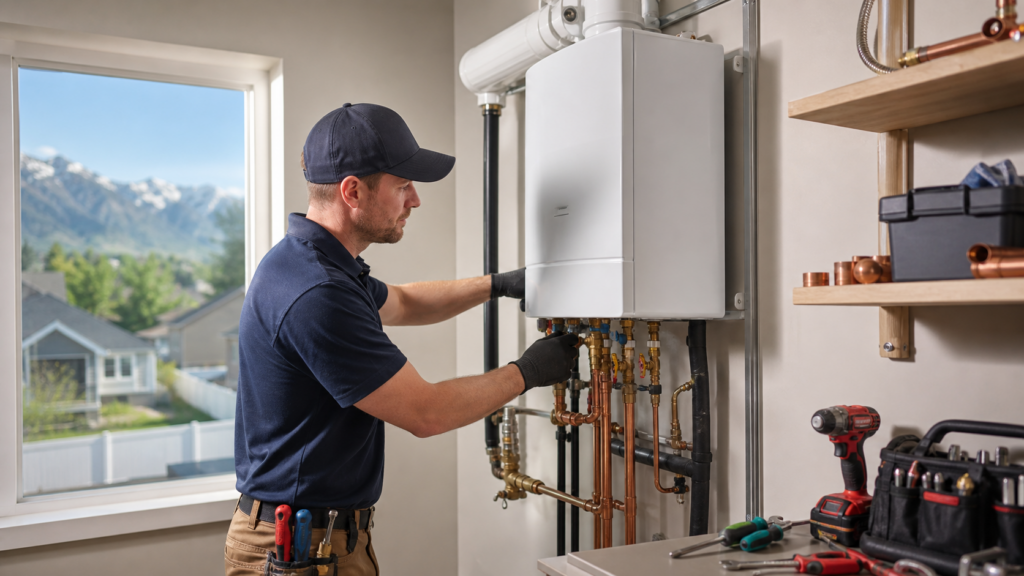
Choosing experienced tankless water heater installers in Provo, UT is an important step when you want to replace an aging water heater, reduce the space used by a large storage tank, or switch to a system that heats water only when it is needed. A tankless unit can be a practical option for many homes, but installation is more involved than simply hanging a new appliance on a wall. The system must be sized correctly, connected to suitable water and energy supplies, vented where required, and set up according to the home’s actual hot-water demand.
Tankless water heaters have become popular because they work differently from conventional storage-tank systems. Instead of keeping dozens of gallons of water heated throughout the day, they activate when hot water is requested.
That difference can affect installation requirements, operating habits, available space, maintenance, and long-term performance.
For homeowners in Provo, understanding these factors before installation can make it easier to choose the right system and avoid common mistakes.
What Is a Tankless Water Heater?
A tankless water heater is a compact appliance that heats water as it flows through the unit.
When someone opens a hot-water faucet, cold water enters the heater. The unit detects the flow and activates its heating system.
Depending on the model, the energy source may be:
- Natural gas
- Propane
- Electricity
The heated water then travels through the home’s plumbing to the faucet, shower, dishwasher, or other fixture.
When hot-water demand stops, the heating process stops as well.
This is why tankless systems are often described as on-demand water heaters.
How Tankless Water Heaters Differ From Traditional Tanks
Traditional water heaters store heated water inside a large insulated tank.
The system periodically reheats the stored water to maintain the selected temperature.
Tankless systems do not normally keep a large supply of heated water waiting for use.
This creates several important differences.
Storage-Tank System
A conventional system generally includes:
- A large tank
- Stored hot water
- Periodic reheating
- A fixed amount of immediately available hot water
- A larger physical footprint
Tankless System
A tankless unit generally provides:
- On-demand heating
- Compact wall-mounted installation
- No large hot-water storage tank
- Continuous heating while demand stays within system capacity
- Different electrical, gas, or ventilation requirements depending on the model
Neither design is automatically right for every property.
The best choice depends on the home, household, plumbing system, and hot-water habits.
Why Homeowners Consider Tankless Water Heaters
There are several reasons homeowners explore tankless systems.
More Usable Floor Space
Tankless units are typically mounted on a wall.
Removing a large storage tank may free floor space in a utility room, garage, basement, or other service area.
This can be useful in smaller homes or areas where storage space matters.
Hot Water Is Heated When Needed
A tankless heater does not normally maintain a full tank of hot water around the clock.
It activates when there is hot-water demand.
For households with suitable usage patterns, this operating method can be appealing.
Long Hot-Water Use
A properly sized tankless heater can continue heating water as long as the required flow stays within its capacity.
This differs from a storage tank that can run out of preheated water during heavy use.
However, “continuous” hot water does not mean unlimited capacity.
Every tankless heater has a maximum flow rate and heating capability.
Why Professional Installation Matters
Installing a tankless water heater can require modifications to existing plumbing and utility systems.
This is particularly important when replacing a conventional tank with a tankless unit.
An installer may need to evaluate:
- Water lines
- Gas supply
- Electrical capacity
- Venting
- Drainage
- Mounting location
- Water pressure
- Incoming water temperature
- Household demand
- Existing appliance connections
Incorrect installation can affect both performance and safety.
What Tankless Water Heater Installers Evaluate First
Professional tankless water heater installers in Provo, UT should begin by understanding the property rather than selecting a unit based only on brand or physical size.
Several factors matter.
Household Hot-Water Demand
The installer needs to estimate how much hot water the household may use at the same time.
For example, a home might occasionally operate:
- Two showers
- A bathroom faucet
- A dishwasher
at the same time.
The tankless unit must be capable of supporting realistic peak demand.
Number of Bathrooms
The number of bathrooms can influence expected hot-water use.
A one-bathroom property usually has different requirements from a large home with several bathrooms and multiple occupants.
However, bathroom count alone is not enough.
Usage habits also matter.
Fixture Flow Rates
Different fixtures use different amounts of water.
A large shower head may require more flow than a bathroom sink.
Installers may consider expected flow from:
- Showers
- Bathtubs
- Kitchen faucets
- Bathroom faucets
- Dishwashers
- Clothes washers
These loads help determine an appropriate unit capacity.
Incoming Water Temperature
A tankless heater must raise incoming water to the desired output temperature.
The colder the incoming water, the more energy is required to achieve the same hot-water temperature.
This is one reason sizing should account for local conditions rather than relying only on general product labels.
Understanding Flow Rate
Tankless water heater performance is often discussed in gallons per minute.
This indicates how much hot water the unit can deliver under specific conditions.
Suppose several fixtures are operating at once.
Their combined demand could be:
- Shower: several gallons per minute
- Kitchen faucet: additional flow
- Bathroom faucet: additional flow
The system must handle the total demand while producing the required temperature rise.
A unit that is too small may struggle when multiple fixtures run simultaneously.
What Is Temperature Rise?
Temperature rise is the difference between incoming cold-water temperature and the desired hot-water temperature.
For example, if incoming water is relatively cold and the desired output is significantly warmer, the heater must produce a larger temperature increase.
Higher temperature rise can reduce how much hot water a unit can supply at one time.
This relationship is important when sizing a system.
Gas vs Electric Tankless Water Heaters
Tankless systems are available in both gas-powered and electric designs.
Each has different installation requirements.
Gas Tankless Water Heaters
Gas units often provide higher heating capacity for whole-home applications.
Installation may involve:
- Gas piping
- Gas pressure evaluation
- Combustion air
- Exhaust venting
- Condensate management on certain units
- Electrical connections for controls
A home’s existing gas line may not automatically be suitable for a new tankless heater.
The installer needs to verify capacity.
Electric Tankless Water Heaters
Electric units do not require combustion venting, but whole-home models can require substantial electrical capacity.
Installation may involve:
- Dedicated circuits
- Correct breakers
- Suitable wire sizing
- Electrical panel evaluation
An older or smaller electrical service may require additional work before a high-capacity electric unit can be installed.
Why Gas Line Sizing Matters
A gas tankless water heater can require a significant amount of fuel while operating at high output.
An existing gas line designed for a conventional water heater may not always provide enough capacity.
Installers need to consider other gas appliances in the home as well.
These may include:
- Furnace
- Range
- Fireplace
- Dryer
- Other heating equipment
The entire gas system needs to support expected demand.
Venting Requirements for Gas Units
Gas-fired tankless heaters need proper combustion and exhaust management.
Venting requirements depend on the specific equipment and installation.
Possible considerations include:
- Vent material
- Vent diameter
- Vent length
- Number of elbows
- Termination location
- Clearance requirements
- Combustion air
Some modern high-efficiency units use specialized venting systems.
The installation should always follow the unit requirements and applicable local rules.
Condensing vs Non-Condensing Tankless Heaters
Gas tankless heaters may be categorized as condensing or non-condensing.
Condensing Units
Condensing systems recover more heat from exhaust gases.
Because condensation can form during operation, the installation typically requires a way to manage condensate.
Non-Condensing Units
Non-condensing systems release hotter exhaust and may have different venting requirements.
Each design has advantages and installation considerations.
The best choice depends on the property and planned installation location.
Choosing the Installation Location
Tankless units are compact, but that does not mean they can be installed anywhere.
The location must allow safe operation and future service access.
Installers may evaluate:
- Wall strength
- Plumbing proximity
- Gas or electrical access
- Vent routing
- Drain location
- Service clearance
- Freeze protection
- Indoor or outdoor suitability
A convenient location can simplify installation and future maintenance.
Indoor vs Outdoor Installation
Some tankless models are designed for indoor use, while others may support exterior installation under appropriate conditions.
Indoor Units
Indoor systems may be protected from weather but can require dedicated venting and suitable combustion arrangements.
Outdoor Units
Outdoor models can reduce indoor vent-routing needs in certain installations, but exposure to weather and low temperatures must be considered.
In Provo, freezing conditions are an important factor.
Outdoor plumbing and equipment must be protected appropriately.
Tankless Water Heaters and Provo’s Cold Winters
Local climate matters when considering water-heating equipment.
During colder weather, incoming water temperatures can be lower.
That means the heater may need to create a greater temperature rise.
This can influence real-world flow capacity.
A unit that appears adequate under warmer conditions may deliver fewer gallons per minute when incoming water becomes colder.
Proper sizing should account for expected seasonal conditions.
Hard Water and Mineral Buildup
Water contains naturally occurring minerals.
When heated, some minerals can accumulate inside plumbing equipment.
Tankless heaters contain heat exchangers with relatively narrow water passages, so mineral buildup can affect performance over time.
Possible effects include:
- Reduced water flow
- Reduced heat-transfer efficiency
- Longer heating time
- Additional strain on components
Regular maintenance can help manage scale.
Why Tankless Water Heater Flushing Matters
Many tankless systems benefit from periodic flushing or descaling.
The process circulates an appropriate cleaning solution through the heat exchanger to help remove mineral deposits.
The appropriate maintenance schedule depends on:
- Water hardness
- Usage
- Equipment design
- Manufacturer guidance
Homes with harder water may need more frequent attention.
Water Softeners and Scale Control
In areas with mineral-heavy water, homeowners may discuss water treatment options with a plumbing professional.
Depending on water conditions, options can include:
- Traditional water softening
- Scale-reduction systems
- Specialized filters
The best approach depends on the home’s water quality and plumbing setup.
A water treatment system should not be selected based only on assumptions.
How the Installation Process Usually Works
Every home is different, but tankless installation often follows several basic stages.
Step 1: Home Evaluation
The installer reviews hot-water demand, utilities, plumbing, and potential installation locations.
Step 2: Equipment Selection
An appropriate unit is selected based on:
- Fuel type
- Required flow
- Temperature rise
- Installation environment
- Household demand
Step 3: Existing Heater Removal
If replacing a conventional water heater, the old tank may need to be disconnected and removed safely.
Step 4: Utility Modifications
Gas, electrical, plumbing, venting, or drainage modifications may be completed as necessary.
Step 5: Mounting the Unit
The tankless heater is securely mounted in an approved location with proper service clearance.
Step 6: Connecting Water Lines
Cold-water and hot-water lines are connected correctly.
Service valves may also be installed to simplify future maintenance.
Step 7: Connecting Energy Supply
The gas or electrical supply is connected according to the unit requirements.
Step 8: Venting and Drainage
Gas-powered units receive the appropriate vent system.
Condensing equipment may also require condensate drainage.
Step 9: Startup and Testing
The installer checks operation, water temperature, flow, connections, and system controls.
Importance of Service Valves
Isolation or service valves can make future maintenance easier.
These valves allow technicians to isolate the heater from the home’s plumbing system.
They can be particularly useful when flushing or servicing the heat exchanger.
Installing appropriate service access during the initial setup can simplify future maintenance.
Can a Tankless Unit Replace Any Traditional Water Heater?
In many homes, a conventional tank can be replaced with a tankless system, but the conversion may require more work than a direct tank-for-tank replacement.
Potential upgrades may include:
- Larger gas lines
- New venting
- Electrical work
- Condensate drainage
- Water-line changes
- Wall mounting
- New service valves
The feasibility and complexity depend on the property.
Whole-Home vs Point-of-Use Tankless Systems
Not every tankless heater is designed to serve the entire home.
Whole-Home Systems
These units are sized to provide hot water to multiple fixtures.
They require careful demand calculations.
Point-of-Use Systems
Smaller units may be installed close to a single fixture or limited area.
Examples can include a remote sink or specific application where local hot-water production is useful.
The correct solution depends on the problem being solved.
Understanding the Hot-Water Delay
A tankless heater produces hot water on demand, but hot water may not arrive at the faucet instantly.
Water still has to travel through the plumbing pipes between the heater and fixture.
If a bathroom is far from the water heater, there can still be a delay.
The distance and pipe layout strongly influence wait time.
Recirculation Options
Some homes use hot-water recirculation systems to reduce the amount of time spent waiting for hot water at distant fixtures.
Certain tankless heaters support:
- Built-in recirculation pumps
- External recirculation systems
- Scheduled circulation
- Demand-based circulation
Recirculation design must be planned carefully because it affects plumbing, energy use, and system operation.
Advantages of Tankless Water Heaters
A properly selected tankless system can offer several useful features.
Compact Design
Wall mounting can free up floor space.
On-Demand Operation
Water is heated when hot water is requested rather than continuously stored in a large tank.
No Large Stored Supply to Deplete
When the unit is properly sized, it can continue providing hot water during extended use without waiting for a storage tank to recover.
Flexible Installation Possibilities
Compact equipment may allow different placement options depending on utility and ventilation requirements.
Limitations Homeowners Should Understand
Tankless water heaters are not perfect for every home.
Limited Maximum Flow
Every system has a maximum output capacity.
If too many fixtures run simultaneously, water may not reach the desired temperature.
Installation Can Be More Complex
Converting from a storage tank can require utility upgrades.
Regular Maintenance Is Important
Scale buildup can affect heat exchanger performance.
Hot Water Is Not Necessarily Instant
Water still has to travel through the plumbing to the fixture.
Understanding these limitations helps homeowners develop realistic expectations.
Signs Your Existing Water Heater May Need Attention
Homeowners often begin considering replacement after noticing problems with an existing system.
Common warning signs can include:
- Inconsistent hot water
- Water that does not become hot enough
- Strange noises
- Visible corrosion
- Leaks around a storage tank
- Repeated repairs
- Reduced hot-water capacity
These symptoms do not automatically mean a tankless system is required.
A professional evaluation can help determine whether repair or replacement makes more sense.
Questions to Ask Tankless Water Heater Installers
Before moving forward with installation, homeowners should understand what the project includes.
Useful questions include:
- How was the unit size determined?
- Is my current gas line large enough?
- Does my electrical panel need changes?
- What type of venting is required?
- Where will the unit be mounted?
- Will service valves be installed?
- Does the system require condensate drainage?
- What regular maintenance is needed?
- How will local winter temperatures affect performance?
- Can the unit support simultaneous showers?
- Is recirculation available?
- What access is needed for future service?
Clear answers can help homeowners compare installation plans properly.
What to Look for in an Installer
Choosing installers involves more than comparing equipment.
Look for professionals who carefully evaluate the property before recommending a system.
Important qualities include:
- Familiarity with tankless systems
- Clear sizing calculations
- Understanding of gas and electrical requirements
- Proper attention to venting
- Clean plumbing work
- Clear explanation of maintenance needs
- Willingness to answer technical questions
- Careful system testing after installation
Avoid choosing a heater based only on the idea that a larger unit is always better.
Correct sizing matters more.
Common Tankless Water Heater Installation Mistakes
Poor planning can create performance problems.
Undersizing the Unit
A small heater may not support simultaneous hot-water demand.
Ignoring Temperature Rise
Flow ratings should be considered alongside incoming water temperature.
Incorrect Gas Supply
An undersized gas line can prevent the appliance from performing correctly.
Poor Vent Design
Improper venting can create both performance and safety concerns.
Skipping Service Valves
This can make future maintenance more difficult.
Ignoring Water Quality
Hard water can contribute to scale buildup.
Poor Location Choice
Installing a unit where service access is difficult can create problems later.
How to Improve Tankless Water Heater Performance
Once installed, a few habits can help the system operate properly.
Avoid Unrealistic Simultaneous Demand
Every heater has limits.
Running several high-flow fixtures at once can exceed capacity.
Maintain the Unit
Follow the recommended flushing and inspection schedule.
Watch for Changes in Performance
A gradual reduction in hot-water flow or unstable temperature may indicate a maintenance issue.
Keep Air and Vent Openings Clear
Gas-fired units need proper airflow and unobstructed venting.
Protect Outdoor Equipment
If the unit or exposed plumbing is outdoors, freeze protection is especially important during cold weather.
Tankless Water Heater Maintenance Checklist
Routine maintenance may include:
- Visual inspection
- Leak checks
- Flushing or descaling
- Filter cleaning
- Vent inspection
- Condensate drainage inspection
- Temperature verification
- Error-code review
- Water-flow evaluation
Not every task needs to be performed by the homeowner.
Some maintenance should be handled by a qualified professional.
What Happens During a Tankless Water Heater Flush?
The heater is typically isolated from the household plumbing using service valves.
A pump circulates a suitable descaling solution through the heat exchanger.
This process helps remove mineral deposits that can restrict flow or reduce heat transfer.
Afterward, the unit is flushed appropriately before being returned to normal operation.
Exact procedures depend on the equipment.
Can Tankless Water Heaters Serve Large Families?
Yes, but proper sizing is critical.
A large family may have several simultaneous hot-water demands.
For example:
- One shower upstairs
- Another shower downstairs
- Dishwasher running
- Kitchen faucet in use
The installer needs to calculate realistic peak demand.
A system suitable for one or two occupants may not be appropriate for a large household.
Is Tankless Suitable for Older Homes?
Tankless systems can often be installed in older properties, but older homes may require additional modifications.
Possible challenges include:
- Limited electrical capacity
- Smaller gas piping
- Older plumbing
- Difficult vent routes
- Limited wall access
- Unusual utility locations
A thorough inspection before installation is especially important in these homes.
Tankless Water Heaters for Home Remodels
A remodel can be a convenient time to evaluate tankless water heating.
Walls may already be open, plumbing may be changing, and utility systems may be upgraded.
This can make it easier to plan:
- New gas lines
- Electrical circuits
- Vent routes
- Recirculation lines
- Improved heater location
Including the water-heating system early in the remodeling plan can reduce complications later.
Preparing Your Home for Installation
Before installers arrive, homeowners can take a few basic steps.
Clear the area around the existing water heater.
Remove storage items blocking:
- Utility rooms
- Closets
- Mechanical spaces
- Electrical panels
- Gas shutoffs
- Plumbing access
Make sure installers can safely move equipment into and out of the property.
If the existing heater is in a tight space, additional access planning may be needed.
Why Accurate Sizing Matters More Than Marketing Claims
Tankless systems are often described using maximum performance numbers.
Those numbers can be useful, but real-world performance depends on actual conditions.
Important variables include:
- Incoming water temperature
- Desired output temperature
- Number of active fixtures
- Fixture flow rates
- Fuel supply
- Unit condition
A proper sizing calculation should consider the home rather than relying on one headline number.
Should You Choose the Largest Tankless Heater Available?
Not necessarily.
Bigger is not always better.
An oversized system may increase installation complexity or provide more capacity than the household actually needs.
The goal is to choose equipment that handles realistic demand safely and efficiently.
A professional installer should size the system based on actual needs.
Tankless Water Heater Replacement Planning
Even tankless equipment eventually requires repair or replacement.
When installing a new unit, think about future service access.
The heater should be positioned so technicians can reach:
- Water connections
- Service valves
- Filters
- Vent components
- Electrical controls
- Gas connections
Good installation planning can make future maintenance easier and cleaner.
Conclusion
Choosing qualified tankless water heater installers in Provo, UT requires more than selecting a compact appliance and replacing an old storage tank. A successful installation starts with accurate sizing, realistic hot-water demand calculations, proper attention to incoming water temperature, suitable gas or electrical capacity, correct venting, safe mounting, and a plan for future maintenance. Provo homeowners should also consider seasonal cold-water conditions, mineral buildup, service access, and whether their household commonly runs several hot-water fixtures at once. When the system is matched carefully to the property and installed correctly, a tankless water heater can provide a practical, space-saving way to produce hot water on demand while giving homeowners better control over how their water-heating system fits their daily routine.
Frequently Asked Questions
How do tankless water heater installers in Provo, UT choose the right unit size?
Installers typically consider household hot-water demand, fixture flow rates, incoming water temperature, desired output temperature, fuel type, and how many fixtures may operate at the same time.
Can a tankless water heater replace a regular water heater?
Yes, in many homes. However, the conversion may require changes to gas lines, electrical circuits, venting, plumbing, drainage, or the installation location.
Do tankless water heaters provide unlimited hot water?
They can continue heating water for extended periods, but every unit has a maximum flow capacity. If demand exceeds that capacity, performance can be affected.
Do tankless water heaters need maintenance?
Yes. Routine inspection and periodic flushing or descaling can help control mineral buildup and maintain proper performance.
Can hard water affect a tankless water heater?
Yes. Mineral deposits can accumulate inside the heat exchanger and reduce water flow or heat-transfer performance over time.
Are gas or electric tankless water heaters better?
Neither option is automatically better. The correct choice depends on available utilities, household demand, electrical capacity, gas supply, installation requirements, and property conditions.
How long does tankless water heater installation take?
Installation time varies depending on the property. A straightforward replacement may require less work than converting from a storage tank that needs new gas piping, electrical upgrades, or venting.
Will a tankless water heater give me instant hot water?
Not necessarily. The unit begins heating on demand, but hot water still has to travel through the home’s pipes before reaching the fixture. A recirculation system may reduce that wait in some homes.